
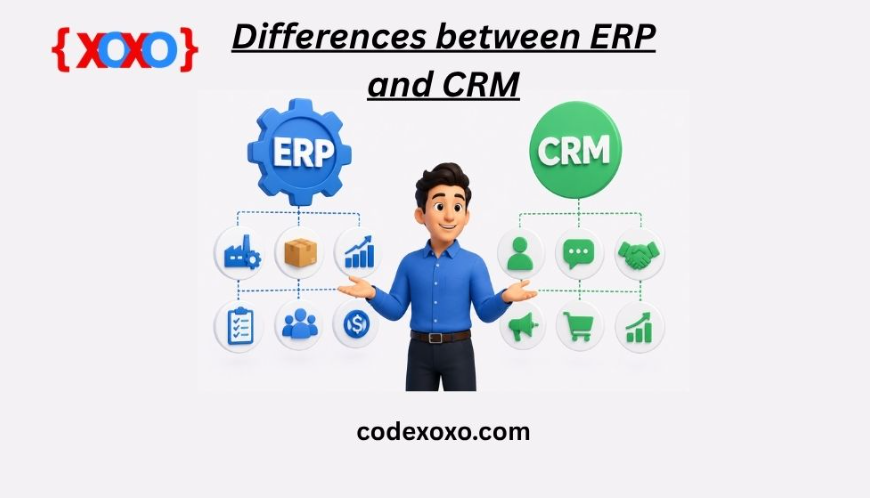
As businesses grow, managing operations and customer relationships becomes increasingly complex. To address these challenges, organizations often implement software solutions such as Enterprise Resource Planning (ERP) and Customer Relationship Management (CRM) systems. While both technologies help improve efficiency and productivity, they serve different purposes within a business. Understanding the Differences between ERP and CRM is essential for choosing the right solution and maximizing business performance.
What is ERP?
Enterprise Resource Planning (ERP) is a business management system designed to integrate and streamline core organizational processes. ERP software centralizes data from various departments, including finance, procurement, inventory, manufacturing, supply chain management, and human resources.
The primary goal of an ERP system is to improve operational efficiency by providing a unified platform where all business functions can work together seamlessly. By eliminating data silos and automating routine tasks, ERP helps organizations reduce costs, improve accuracy, and gain greater visibility into business operations.
What is CRM?
Customer Relationship Management (CRM) is a software solution focused on managing customer interactions and improving customer relationships. CRM systems help businesses track leads, manage sales pipelines, automate marketing activities, and provide customer support.
The primary objective of CRM is to enhance customer satisfaction and increase revenue by improving communication and engagement with prospects and existing customers. CRM platforms store customer information in a centralized database, allowing sales and customer service teams to access valuable insights and deliver personalized experiences.
Key Differences Between ERP and CRM
Primary Focus
The most significant difference between ERP and CRM lies in their focus areas. ERP is primarily concerned with internal business processes such as finance, inventory, production, and operations. CRM, on the other hand, focuses on external activities involving customers, sales, marketing, and customer service.
Users and Departments
ERP systems are typically used by finance teams, operations managers, procurement departments, and human resources personnel. CRM systems are mainly utilized by sales representatives, marketing professionals, and customer support teams who interact directly with customers.
Business Objectives
ERP aims to improve operational efficiency, reduce costs, and optimize resource management. CRM is designed to strengthen customer relationships, increase sales opportunities, and enhance customer retention.
Data Management
ERP manages business-critical operational data, including financial records, inventory levels, supplier information, and employee details. CRM stores customer-related information such as contact details, purchase history, communication records, and sales activities.
Benefits of ERP and CRM Integration
Many organizations choose to integrate ERP and CRM systems to create a complete business management ecosystem. Integration enables seamless data sharing between departments, ensuring that customer-facing teams and operational teams work with accurate and consistent information.
For example, sales teams can access inventory data before confirming orders, while finance teams can monitor customer transactions more efficiently. This integration improves collaboration, enhances decision-making, and delivers a better customer experience.
Which Solution Does Your Business Need?
The choice between ERP and CRM depends on your business requirements. Companies focused on improving operational efficiency and resource management may prioritize ERP implementation. Businesses looking to enhance customer engagement, sales performance, and marketing effectiveness may benefit more from CRM solutions.
However, many growing organizations eventually require both systems to achieve comprehensive business management and long-term scalability.
Conclusion
ERP and CRM are powerful business technologies that serve distinct yet complementary functions. ERP streamlines internal operations, while CRM strengthens customer relationships and drives revenue growth. Understanding their differences allows organizations to make informed technology investments and align software solutions with business objectives. By leveraging the right combination of ERP and CRM, businesses can improve efficiency, increase profitability, and achieve sustainable growth in a competitive marketplace. Organizations can also partner with Codexoxo Technologies to implement and optimize ERP and CRM solutions for maximum business value.