
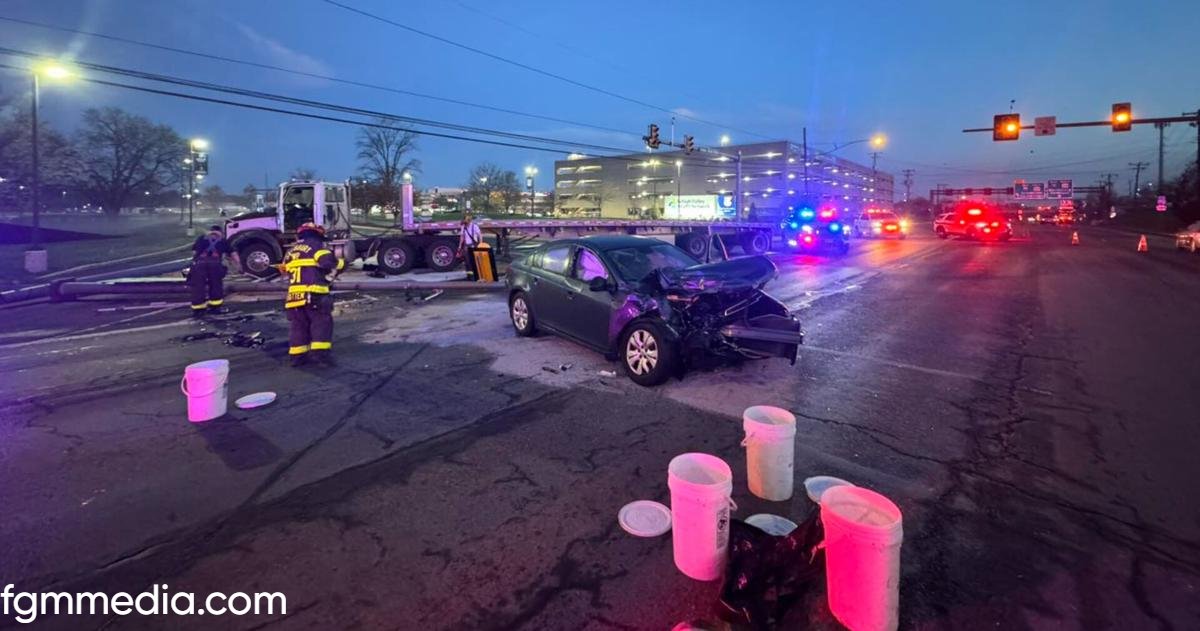
Driving at night is significantly more dangerous than driving during the day. According to the National Safety Council, the fatality rate per mile driven is roughly three times higher at night than during daylight hours. Reduced visibility, impaired depth perception, glare from oncoming headlights, and a higher prevalence of impaired and fatigued drivers all contribute to the increased risk.
In the Lehigh Valley, the mix of suburban roads, rural highways, and high-speed corridors like Route 22 and I-78 creates diverse nighttime driving hazards. Understanding how reduced visibility affects accident liability and what legal options are available to night driving accident victims is important for anyone who has been injured in a crash after dark.
Why Night Driving Is More Dangerous
The human eye is not designed for low-light conditions. At night, peripheral vision is reduced, color perception is diminished, and the ability to judge distances and speeds is impaired. Even with headlights on, a driver’s visibility is limited to the range of the headlights, typically 250 to 500 feet depending on whether low beams or high beams are used.
At highway speeds, a vehicle can cover 500 feet in approximately five seconds. This means that by the time a hazard appears within headlight range, the driver may have only seconds to perceive, react, and stop. If the driver is traveling too fast for conditions, even that narrow window may not be enough.
Common Causes of Night Driving Accidents
• Overdriving headlights. Traveling at a speed where the stopping distance exceeds the headlight visibility range. At 65 miles per hour on low beams, a driver cannot stop within the distance illuminated.
• Impaired driving. A disproportionate number of drunk and drug-impaired drivers are on the road between 10 PM and 3 AM.
• Fatigued driving. Drowsiness reduces reaction time and attention, with the risk peaking during late-night and early-morning hours.
• Failure to use headlights properly. Driving with only one headlight, failing to dim high beams for oncoming traffic, or driving without headlights entirely.
• Pedestrian visibility. Pedestrians wearing dark clothing on roads without sidewalks or street lighting are extremely difficult to see.
Headlight Requirements Under Pennsylvania Law
Pennsylvania’s Vehicle Code at 75 Pa.C.S. § 4303 requires headlights to be activated from sunset to sunrise and during any conditions where visibility is less than 1,000 feet. Drivers must dim their high beams when within 500 feet of an oncoming vehicle or within 300 feet of a vehicle they are following. Violations of these requirements can establish negligence in an accident case. Car accident lawyers serving the Lehigh Valley regularly cite headlight violations as evidence of fault in nighttime collision cases.
Liability Issues Unique to Night Driving Accidents
Night driving accidents raise specific liability questions that do not arise in daytime crashes. The defense may argue that the plaintiff was driving too fast for visibility conditions, that the plaintiff failed to use high beams when appropriate, or that the plaintiff’s own headlights were defective or improperly aimed.
Conversely, the plaintiff may argue that the at-fault driver was operating without adequate headlights, failed to dim high beams causing glare blindness, was driving while impaired or fatigued, or failed to maintain a safe speed for the reduced visibility conditions.
Deer Strikes and Animal-Related Accidents
The Lehigh Valley’s suburban and rural areas see a significant number of deer-vehicle collisions, particularly during the fall mating season. Pennsylvania consistently ranks among the top states for deer strikes. While a driver who hits a deer cannot sue the deer, liability questions can arise if another driver’s reaction to an animal causes a collision, or if a government entity failed to install warning signs in a known high-crossing area.
Protecting Your Claim After a Nighttime Accident
Documenting a nighttime accident can be more challenging than a daytime crash. Photograph the lighting conditions, including whether street lights were functioning, the position of the vehicles relative to any light sources, and the visibility of road markings and signage. Note the weather conditions and whether there was glare from oncoming traffic.
If impaired driving is suspected, request that police conduct field sobriety testing and blood alcohol testing. This evidence is critical for both the criminal case against the impaired driver and your civil claim for compensation.
The two-year statute of limitations applies, but evidence of nighttime conditions, lighting, and visibility can degrade quickly. Acting promptly to preserve evidence and investigate the accident gives you the best chance of establishing fault and recovering fair compensation.